
About
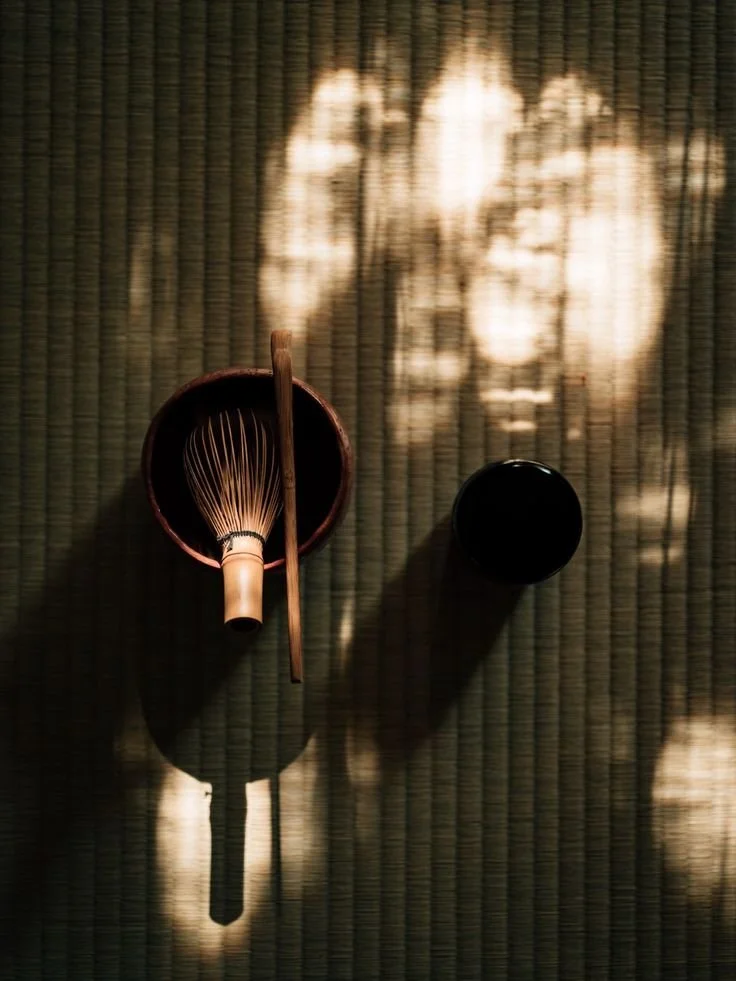
What This School Seeks to Explore
In this small school, we explore the spirit of Dō-teki Shuyō (道的修養)—the way of disciplined self-cultivation that has long been passed down in Japan—using Reiki healing, a hands-on therapy originating in Japan, as one point of entry.
In particular, we hold a deep interest in the ways of being and modes of living that were embedded in Japanese spiritual culture before the full onset of modernization and Westernization.
What does it mean to live?
Why do human beings live while carrying suffering and inner conflict?
At the foundation of this school’s inquiry lies the question of whether genuine healing can truly be reached through a strictly dualistic, black-and-white perspective—one that frames experience in terms such as “broken” and “to be fixed,” or “suffering” and “its removal.”
Perhaps healing is not the complete eradication of pain or wounds, but rather the ability to hold them, to include them, and to live on together with them.
This way of understanding resonates with the state of Awai—the in-between, the liminal—expressed in long-standing Japanese phrases such as Seidakuwase Nomu (“to take in both purity and impurity”) and Aku wo mo Idakimairaseru (“to embrace even what is deemed evil”), which speak to an attitude of not excluding opposing elements, but accepting them as they are.
How, then, can one live in a way that is not constantly driven by excessive fear or anxiety, but instead allows for a calm mind and a quiet sense of well-being in everyday life?
In seeking responses to this question, I continue my inquiry by turning the attention to prewar Japanese culture, traditions, thought, and belief systems, as well as to the worldview, outlook on life, and embodied ways of living through which people of that time engaged with their daily existence.
Reiki healing is merely one important point of entry that has guided me into this exploration.
What this school ultimately seeks is not the acquisition of techniques themselves, but a deeper understanding of how one lives—one that arises from an Eastern, non-dual perspective rather than a Western dualistic framework.
About this School
This school does not operate a permanent studio or salon. Classes are held only on designated occasions, with Kurama Mountain in Kyoto as the base location.
For this reason, we do not accept walk-in participation or last-minute requests.
Enrollment is arranged through prior communication, allowing us to enter the learning space with mutual understanding and intention.
This is a small, independently run school.
It is not designed for efficiency, scale, or mass instruction, but is sustained with care for each individual encounter and the quality of learning itself.
This is not a place where knowledge is delivered one-sidedly to many people at once.
Rather, it is a learning space that values dialogue—where questions are deepened and attention is gently turned inward.
During the course, I may at times engage as a companion in dialogue, quietly drawing attention to unconscious assumptions, habitual patterns of mind, or subtle inner dissonance as they arise.
For this reason, this place may be more suitable for those who are open to self-reflection, rather than those seeking ready-made answers.
More than what can be conveyed through words or conceptual knowledge alone, this school places importance on meeting in person, sharing the same space, and engaging in the exchange of energy that occurs through direct presence.
What I seek to share are the subtle sensibilities of the Awai—the in-between realm, the liminal space—that I have come to perceive through my own ongoing practice and inquiry, and which can only be transmitted through lived, embodied experience.
About Me

ねう|Neu
Born and raised in Kyoto,
with cultural roots in both Japan and Europe, I have lived since childhood with a sense of standing in the awai—the in-between space—of East and West.
From an early age, I have continued to hold fundamental questions such as:
“Why do human beings live?”
“Why do people suffer?”
“How can one live day by day with a calm and settled heart?”
In seeking answers to these questions, I deepened my studies by engaging with religion and faith, philosophy, systems of thought, and various forms of spirituality. At the same time, I developed a strong interest in what it truly means to be healed and to live well, which led me to explore fields such as energy healing and hands-on therapeutic practices.
Gradually, however, I began to sense the limitations of the dualistic approach to healing often presented in contemporary spirituality—an approach that unconsciously divides the world into “love” and “darkness,” seeking to embody only “love” while attempting to exclude or reject everything that does not feel like “love”.
In response, I undertook independent study in psychology, theories of the autonomic nervous system, and somatic understandings of trauma, and began to explore gentler forms of recovery grounded in a foundation of safety for both mind and body.
Through this process of inquiry, I came to feel anew the profound potential of Reiki, a hands-on healing practice originating in Japan that works with both the body and the mind.
Today, alongside contemporary somatic perspectives such as polyvagal theory, I continue to explore the spirituality cultivated by the Japanese people before the war and the culture of Dō (the Way) that underlies it—drawing on a wide range of fields including Bushidō, Zen, Confucianism, ancient Shinto, historical modes of embodiment and everyday life, and Japanese history.
This inquiry is not undertaken in order to assert definitive answers.
Rather, by remaining within the heart of the questions themselves, I continue to quietly deepen an open-ended and ongoing exploration.
A Final Note
Learning at this school is contemplative and introspective in nature.
Rather than what is commonly referred to as New Age spirituality, it is an endeavor to explore grounded wisdom over time—one that is anchored in a more academic and philosophical attitude of inquiry.
Rather than seeking healing that prioritizes comfort or emotional uplift alone, this path invites moments of pause.
It asks us to turn our attention, quietly and honestly, toward what remains unorganized within us: inner tensions and conflicts, the ego, and unconscious patterns shaped by past wounds.
In this learning, the process itself is held as something meaningful.
For those who wish to arrive quickly at answers, or who place greater value on enlightenment-life experience, lightness and immediacy, this approach may at times feel uncomfortable or even unsettling.
Yet for those who are willing to remain with their questions—to slow down, to inquire sincerely, and to deepen self-reflection as a means of cultivating their way of being—this can become a place where one is finally able to breathe more fully.
Here, through Reiki, we explore Japanese spirituality, culture, and a way of being understood as dō—a path or discipline of life. Rather than focusing on acquiring qualifications or titles, emphasis is placed on continually asking how one lives, and how one chooses to be.
For this reason, a genuine interest in and respect for Japanese traditions and culture form the foundation of this learning.
This school may resonate with those who have begun to feel a quiet fatigue from trying to maintain “correctness” or a perpetually “healed” state.
With those who have begun to feel a quiet unease as traditions, culture, and healing are increasingly detached from their original contexts, selectively extracted, and repackaged as visually polished products—consumed within market-driven, image-oriented spiritual spaces shaped by Western capitalism and consumerism.
It may also speak to those who wish not to add more, but to gently pare things away; who seek not to heal everything, but to live while honoring an inner sense of peace, noticing the small moments of quiet happiness woven into everyday life.
For those who wish to slow their pace, breathe more deeply, and recover the feeling of standing quietly in the liminal space between the visible and the invisible worlds, the doors of this school are open—softly, and without insistence.